Iowa Flood Center Meets with Legislators to Highlight Flood-Related Research and Technology
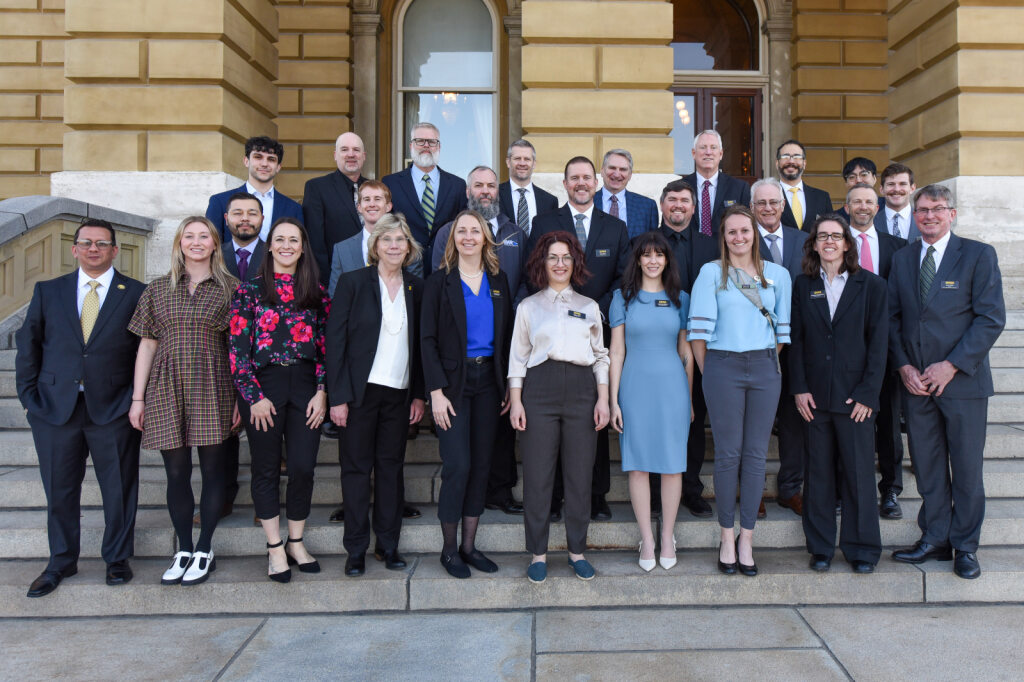
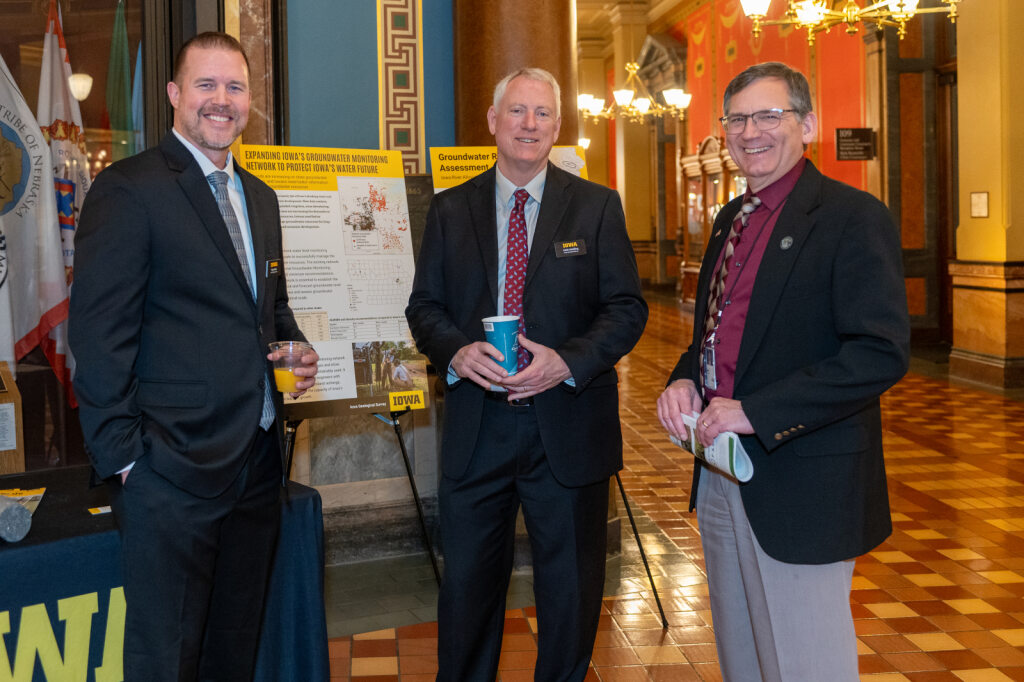
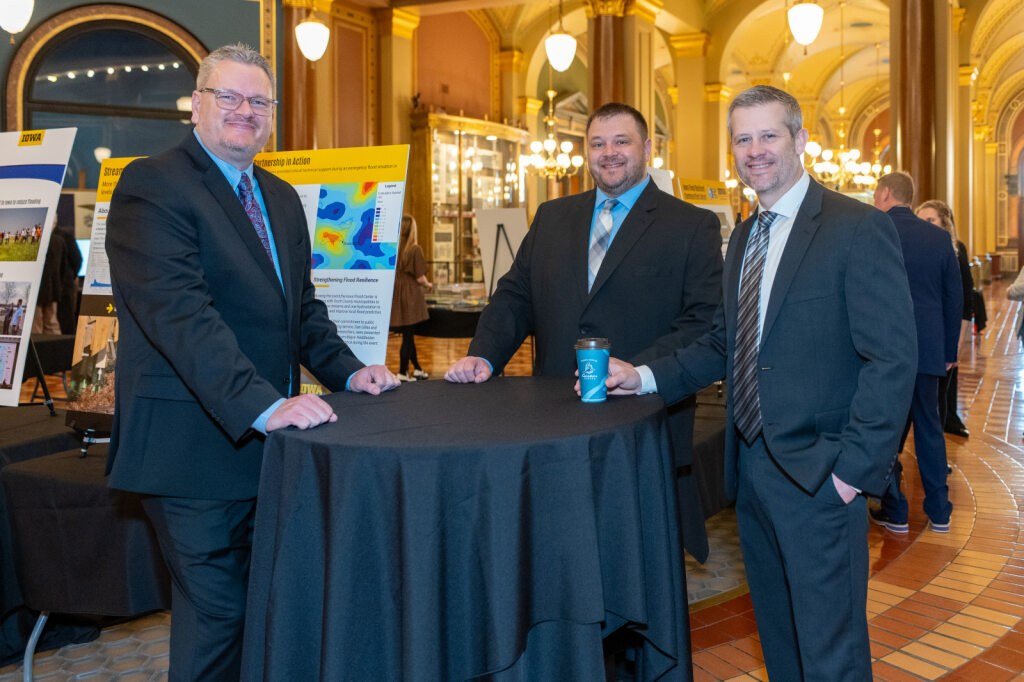
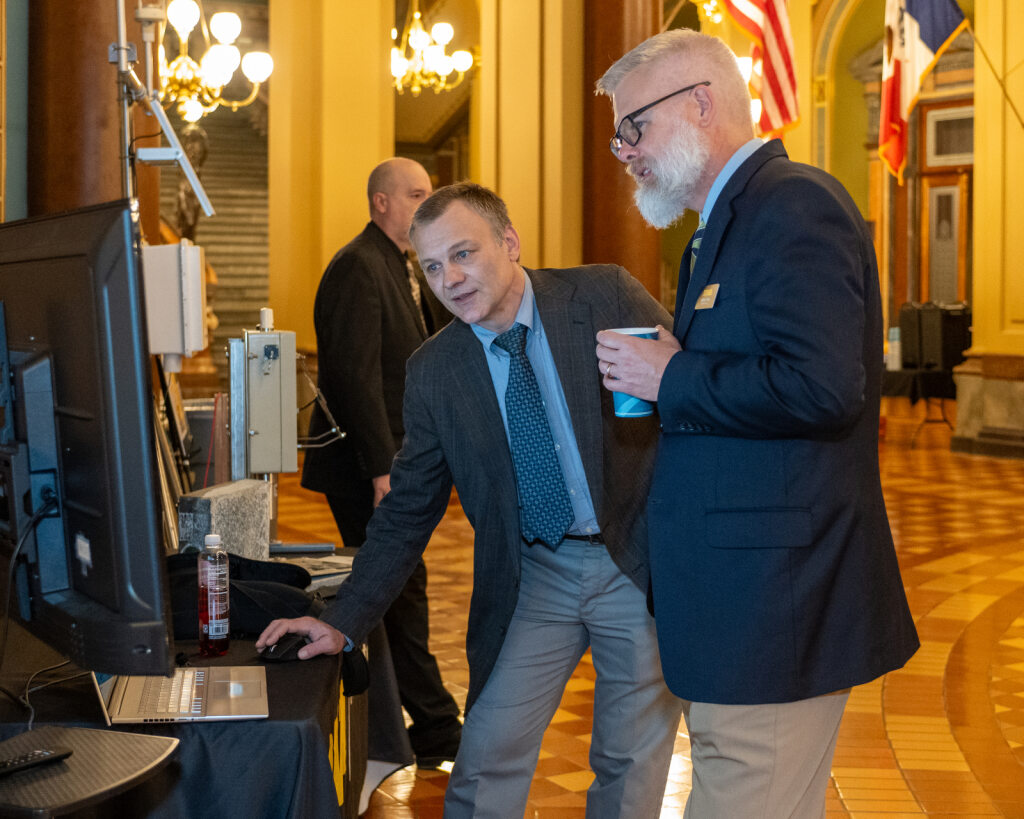
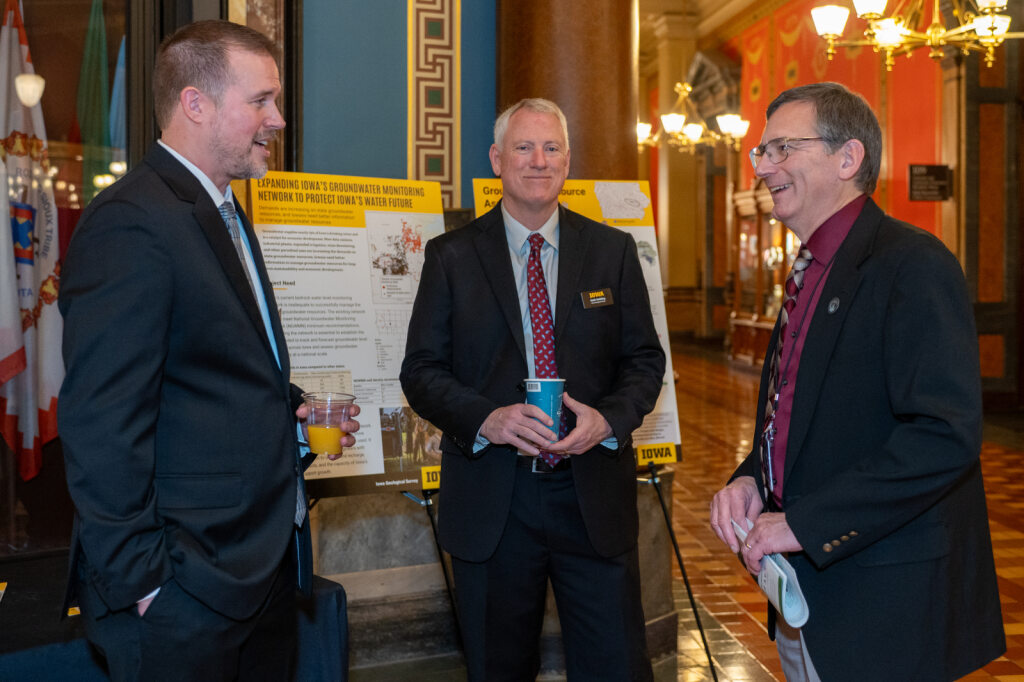
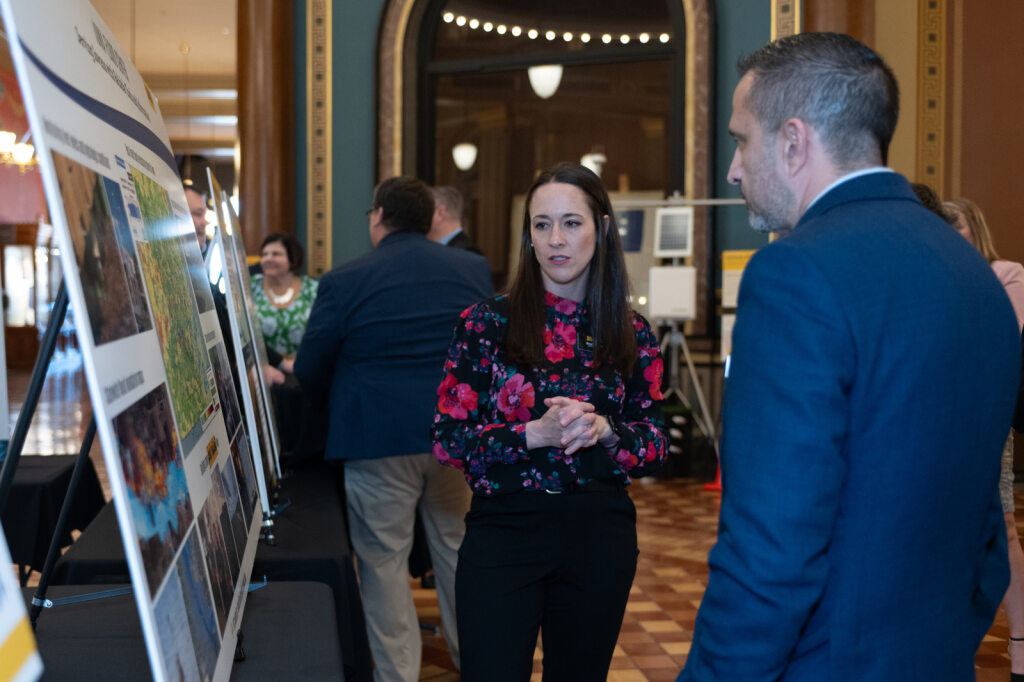
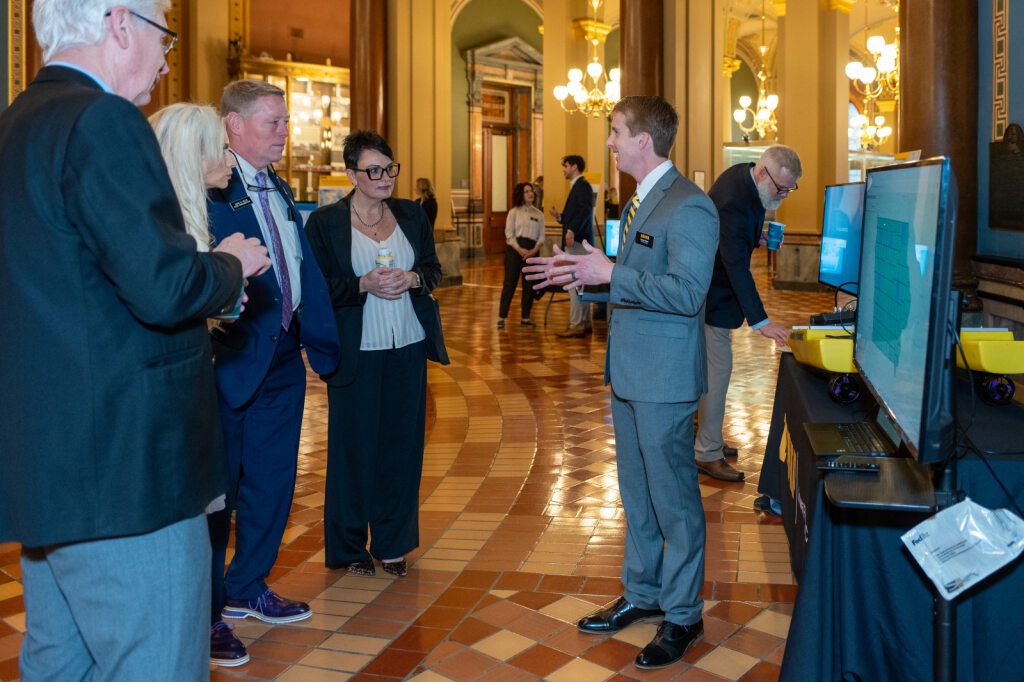
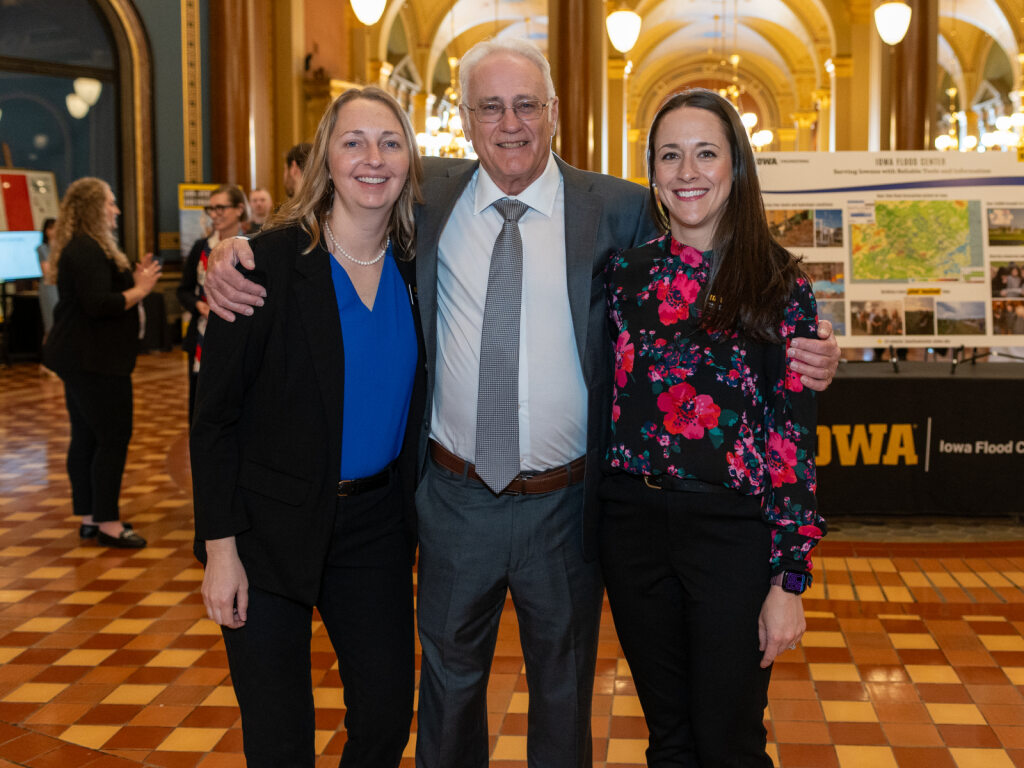
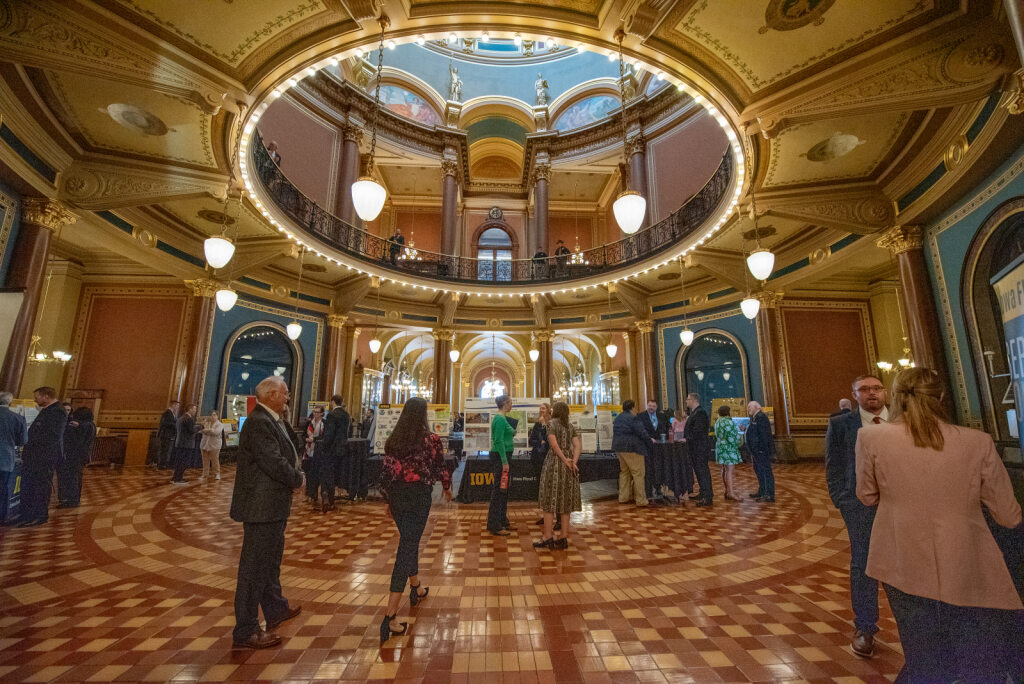
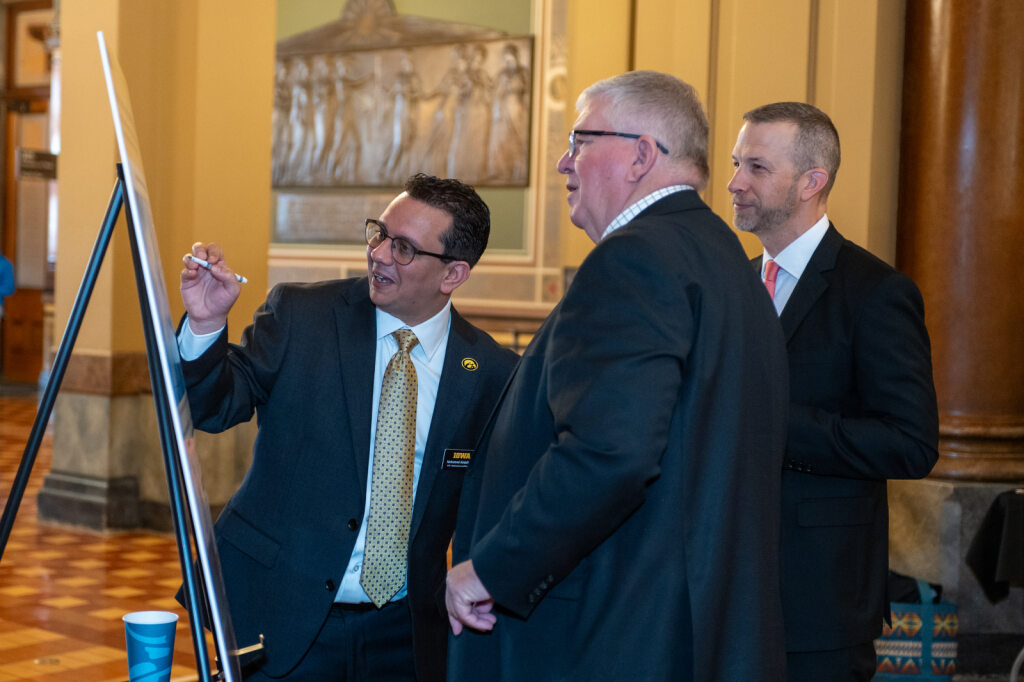
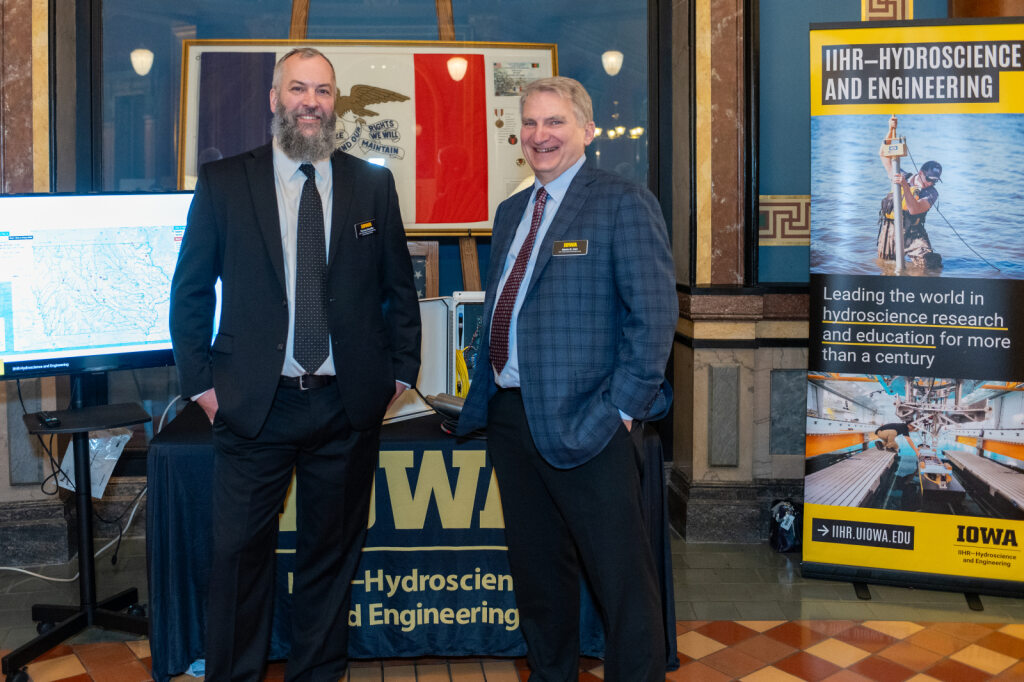
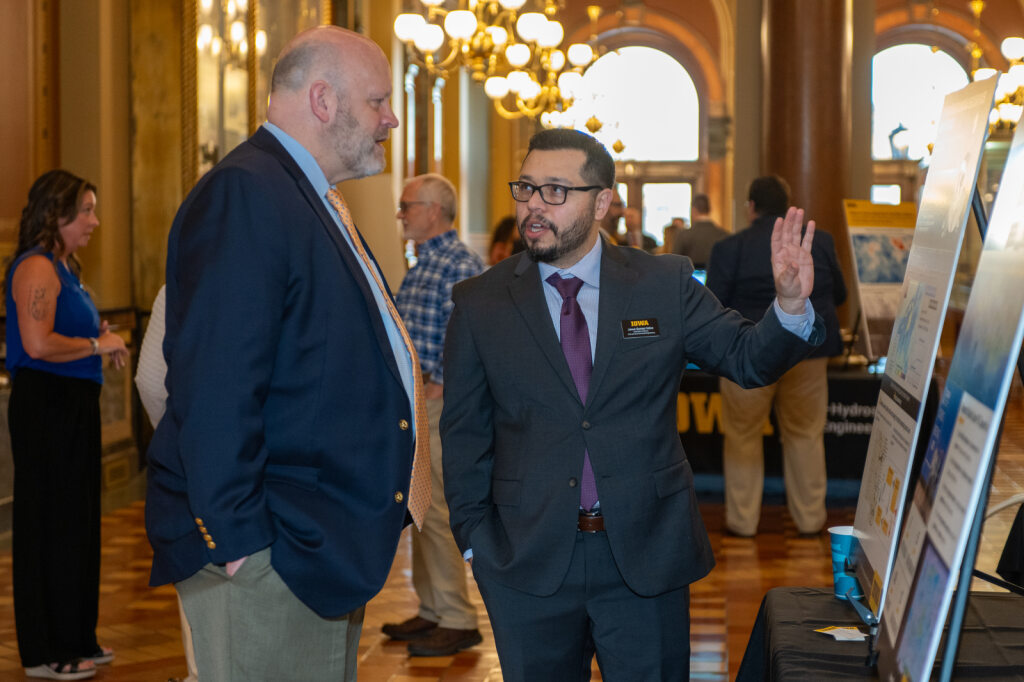
On Tuesday, March 10, the Iowa Flood Center (IFC) hosted its annual legislative breakfast at the Iowa State Capitol in Des Moines, along with partners and colleagues from the Iowa Geological Survey (IGS). The event highlights IFC research, resources, and tools that help Iowans better understand and reduce their flood risks. IFC and IGS researchers, students, and staff talked with legislators to share information and demonstrations of their research, tools, and ongoing work, including:
Expanded flood and drought monitoring and forecasting in Southwest Iowa — 18 new hydrologic weather stations (or hydrostations) will measure rainfall, soil moisture and temperature, wind speed and direction, and shallow groundwater. This boosts the IFC’s statewide network to 75 hydrostations, bringing us closer to our goal of 99 — one in each county.
Development of the Iowa Drought Information System (IDIS) — New hydrostation data will feed into IDIS, an online application displaying real-time, drought-related information. IDIS will be available to the public at no cost to improve drought mitigation and response.
New state-of-the-art stream sensors in Northwest Iowa — Updated stream sensors will provide reliable river level data, expanding the IFC network and communicating river levels to the Iowa Flood Information System (IFIS). IFIS is an online platform that provides real-time flood information directly to emergency responders, local decision-makers, and the public.
Development of an advanced flash flood forecasting system — Early warnings and more lead time will help communities and individuals better prepare for extreme rainfall.
Groundwater studies — The Iowa Geological Survey continues to assess the sustainability of Iowa’s groundwater resources in the face of increasing demands from data centers, industry, and other users. IGS staff discussed their groundwater availability assessment for the Iowa River aquifer and the need for bedrock water level monitoring.
Geologic hydrogen — IGS staff shared new research and data gaps on geological hydrogen in Iowa.
Geologic mapping initiatives — New geological maps display Iowa’s glacial history, bedrock geology, and critical minerals.
Education and outreach — More than 70 outreach events each year bring IFC’s flood expertise to K-12 students and teachers, decision-makers, community leaders, emergency first responders, and the public, helping them understand and reduce their flood risks.
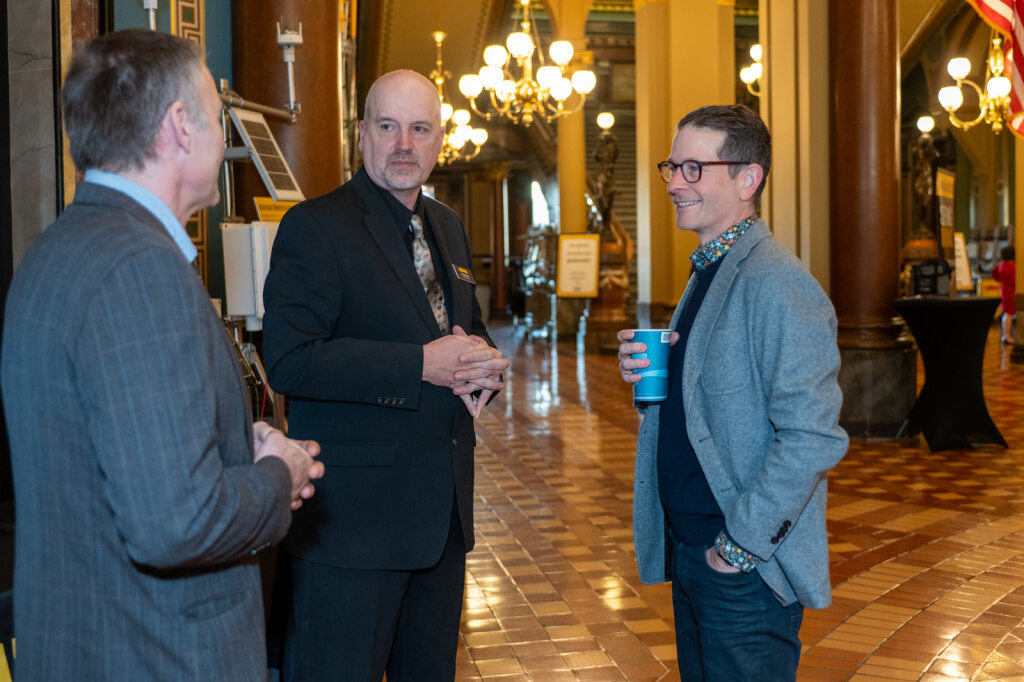
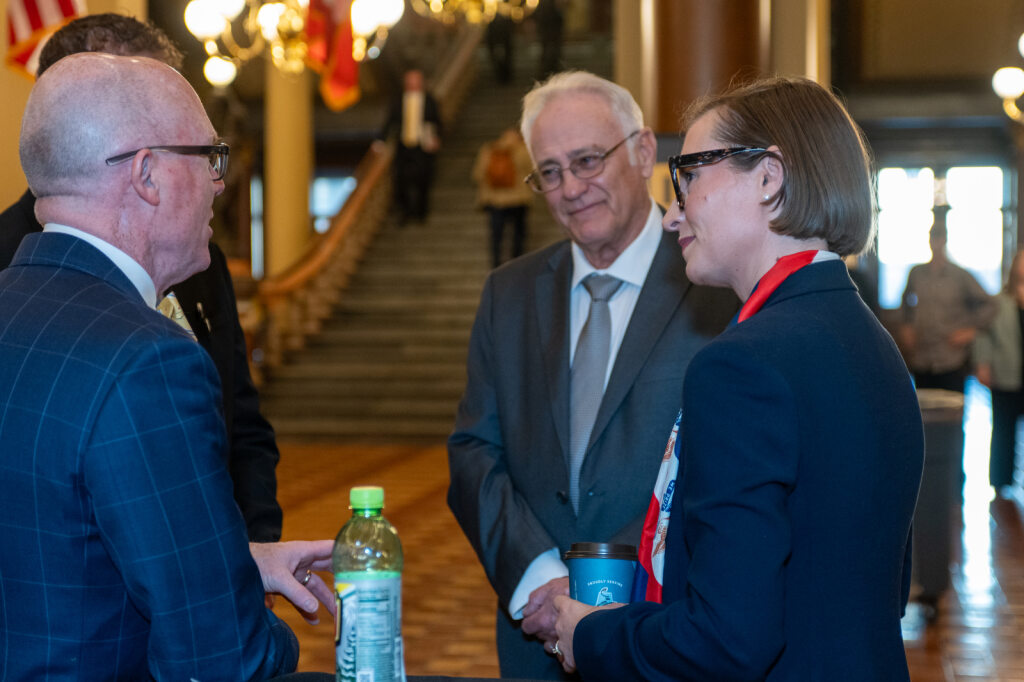
Legislators and local, state, and federal partners joined IFC staff to celebrate successful collaborations and exchange ideas for water resource management across the state. Partners present at the event included representatives from the recently flood-impacted community of Spencer as well as American Flood Coalition staff from Washington, D.C., who have active projects with IFC to advance community flood resilience and explore innovative farming practices to reduce flood risks at the watershed scale.
The IFC received a state appropriation of $1.2 million dollars in fiscal year 2026.
Gallery